GMS TS 001
Hydrogen Recirculation Loop Testing
Blowers, ejectors, control valves, separators and complete anode modules tested under real-world operating conditions at GEMESIS facilities.
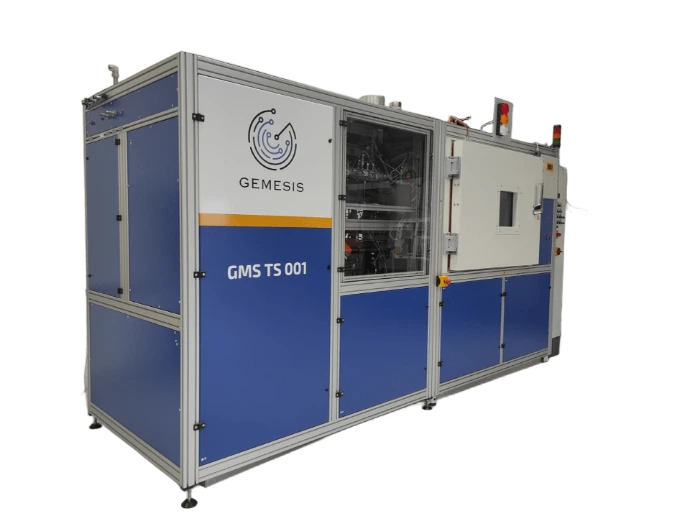
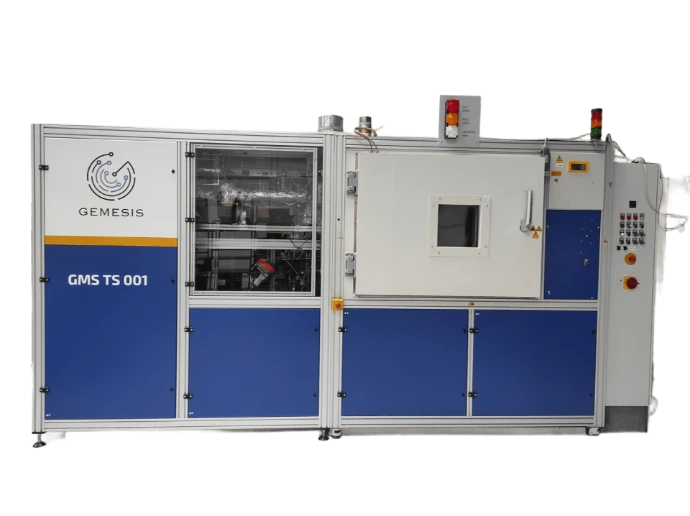
What is GMS TS 001?
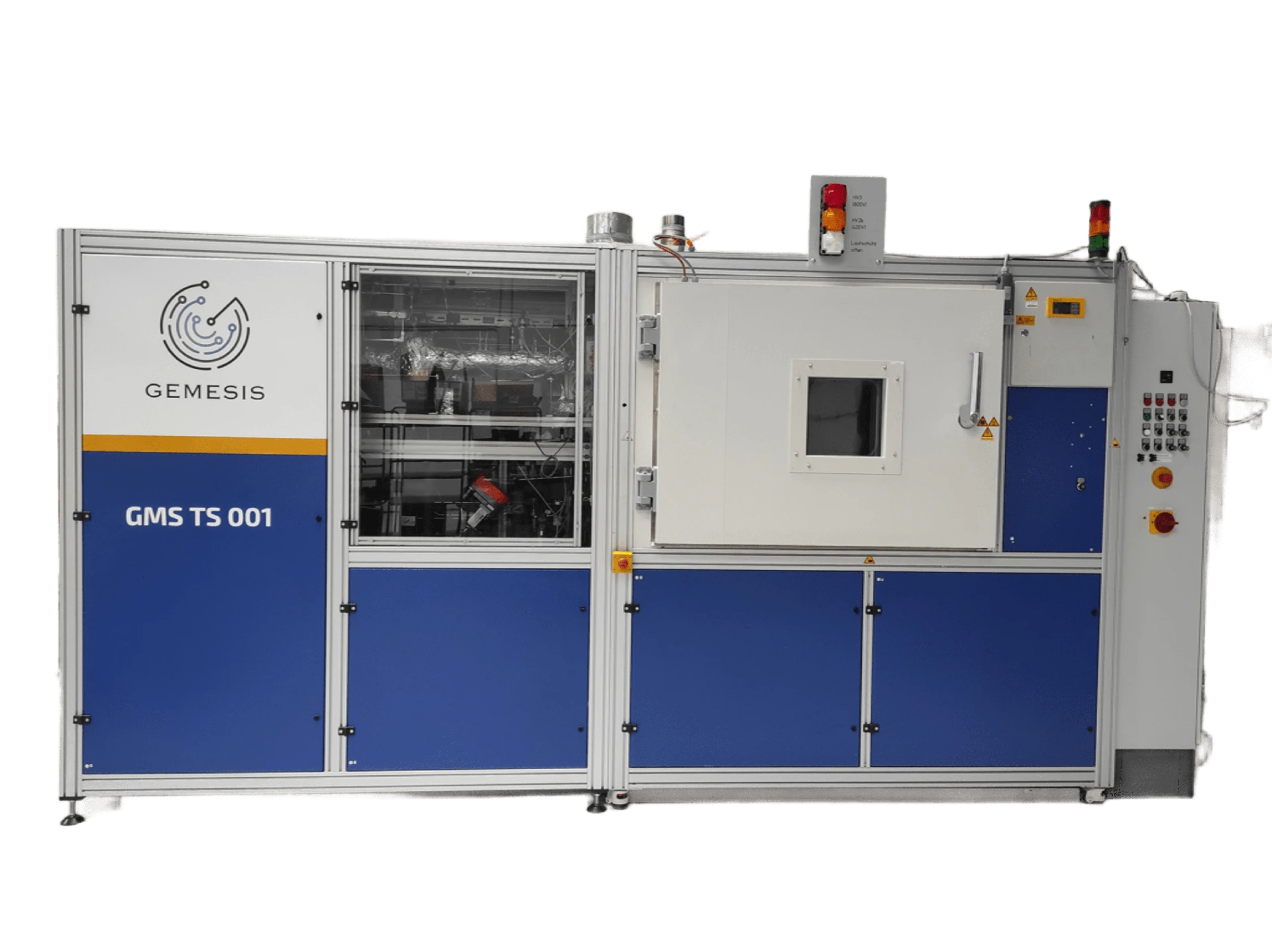
GMS TS 001 is a hydrogen test platform that reproduces a complete anode recirculation loop. The closed-loop gas circulation allows components to be tested under the backpressure, temperature and humidity conditions they will experience in real operation.
Closed-loop H₂
37.5 kg/h
H₂ supply: at 2 bar
9 kg/h
Climate chamber
-25 to +85 °C
Steam humidification
21 kg/h
Electrical power supply (DUT)
0 - 1000 V DC / 30 A
Data acquisition
1 ms
Fast acquisition channels
100 000
Main Technical Specifications
| Specification | Value |
|---|---|
| Recirculation loop | Up to 37.5 kg/h (closed loop) |
| Hydrogen supply | Up to 9 kg/h at 12 bar |
| Compatible gases | H₂, N₂ or controlled mixture |
| Humidification | Steam: 21 kg/h; liquid water: 300 mL/min |
| Climate chamber | -25 to +85 °C |
| Electrical power supply | 0 - 1000 V DC / 30 A |
| Data acquisition | 100 ms on all channels; 1 ms on fast channels |
| Control | GEMS software |
| Loop pressure | According to configuration |
| Instrumentation | Flow, pressure, temperature, humidity, electrical power |
| Safety | ATEX design, H₂ detection, ventilation, dedicated procedures |
| Installation | At GEMESIS facilities |
Components and Applications
GMS TS 001 enables testing and characterization of key components used in the anode recirculation loop.
Recirculation Blowers

Ejectors and Jet Pumps
Control Valves
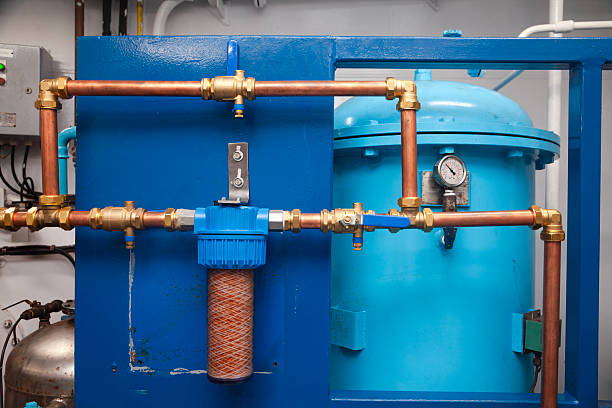
Water Separators and Demisters
Preheaters
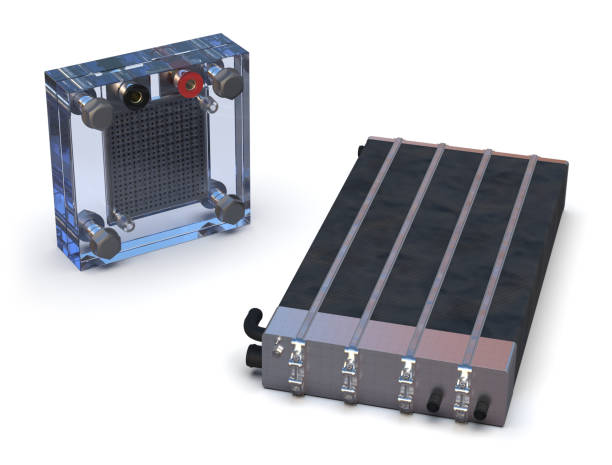
Complete Anode Modules
Test Capabilities
A wide range of tests can be performed to characterize and validate hydrogen recirculation components.
Performance Mapping
• Blower and compressor curves, including pressure rise as a function of flow rate and speed
• Entrainment ratio and operating range of an ejector or jet pump
• Authority, linearity and hysteresis of a pressure control valve
• Pressure drop and flow coefficient of gas-flow components
• Thermal efficiency of a heat exchanger or preheater
• Electrical efficiency and specific power
• Turndown ratio and minimum stable operating point
System-Level Testing
• Complete anode module or recirculation assembly under real closed-loop conditions
• Component interaction between blower, valve and separator
• Purge strategy adjustment and hydrogen consumption per purge
• Validation of start-up and shutdown sequences
• Transient loop response to a load step
• Degraded operation with a deliberately detuned component
Water and Two-Phase Flow
• Separation efficiency of a knockout or coalescer
• Droplet carry-over as a function of gas velocity
• Condensation mapping along the loop and dew-point monitoring
• Controlled liquid water injection up to 300 mL/min
• Validation of draining and level control
• Flooding and drying limits
Gas Composition Effects
• Hydrogen and nitrogen mixing with controlled ratio
• Simulation of nitrogen accumulation caused by crossover
• Performance sensitivity to gas density and molar mass
• Operation with helium or argon, as an option
• Methane and hydrogen mixtures, available as an option after requalification
Climate and Thermal Testing
• Cold start from -25 °C and time to reach nominal operating conditions
• Hot operation up to +85 °C ambient temperature
• Freeze/thaw cycling with residual water inside the component
• Thermal shock on the cooling circuit from -30 to +85 °C
• Sensitivity to cooling flow rates from 2 to 18 L/min
Control and Electrical Testing
• Control-loop dynamics captured at 1 ms
• Validation of PWM, analog and CAN commands
• High-voltage insulation behavior up to 1000 V DC
• Current draw and inrush current
• Verification of interlocks and fallback states
• Behavior following loss of power, air, cooling or control signals
Endurance and Lifetime Testing
• Continuous 24/7 operation without supervision
• Start/stop cycling over several thousand events
• Accelerated aging under combined humidity and temperature conditions
• Performance drift monitoring throughout the test campaign
• Testing to failure with data capture for root-cause analysis
• Performance comparison before and after the test campaign
Leak Tightness and Integrity
• Helium leak testing before and after the test campaign
• Hydrogen sniff testing on each connection and interface
• Leak evolution under thermal cycling and pressure
• Verification of proof pressure and burst-pressure margin
• Compatibility screening of seals and elastomers
Acoustics and Vibration
• Noise level as a function of operating point, as an option
• Tonal content and blade-passing frequency identification
• Vibration signature and bearing health monitoring
• Acoustic signature drift during endurance testing
Development and Qualification
• Design of experiments and test protocol engineering
• Supplier comparison using an identical test protocole
• Incoming inspection and batch conformity testing
• Model correlation and CFD validation datasets
• Cross-comparison of sensors and instruments
• Test data package for internal or customer design reviews
Accelerated Reliability and Durability Testing of Hydrogen Components
How can you identify the operating limits of a hydrogen component before integrating it into a fuel cell?
The reliability of a hydrogen system depends on its ability to maintain performance despite variations in temperature, pressure, flow rate and humidity throughout operation.
With the GMS TS 001, GEMESIS offers accelerated testing and endurance test campaigns to assess the robustness of blowers, ejectors, valves, separators and anode recirculation modules.
Unlike characterization tests performed at only a few operating points, these campaigns expose components to repeated or combined operating conditions and monitor their performance over time.
Accelerated Aging and Endurance Testing
Our platform supports extended continuous operation tests, thousands of start-up and shutdown cycles, and test campaigns combining temperature, humidity, flow rate and pressure variations.
Automated performance monitoring helps identify performance drift, efficiency losses, intermittent faults and degradation mechanisms.
Identifying Operating Limits: An Approach Inspired by HALT Testing
HALT (Highly Accelerated Limit Test) methods aim to identify equipment failure modes and robustness limits.
The GMS TS 001 makes it possible to apply this approach to the search for operating limits under thermal, fluidic and electrical constraints, within the operating ranges permitted by the test facility.
However, it is not a conventional HALT chamber combining extreme temperatures and applied vibration. Test campaigns are defined according to the component, test objectives and safety requirements.
An Instrumented Platform for Understanding Failures
The GMS TS 001 combines a climate chamber operating from -25 to +85°C, a recirculation loop representative of anode systems, and high-speed data acquisition down to 1 ms on selected channels.
GEMS software controls test campaigns, records operating parameters and supports the analysis of anomalies and performance drift.
The objective is to understand why, when and under which conditions a component loses performance, helping improve its design and reliability.
Test Your Components at GEMESIS
Our teams handle test protocol definition, component installation, test execution and reporting of results.
Contact us to assess the feasibility of your accelerated reliability and aging tests.